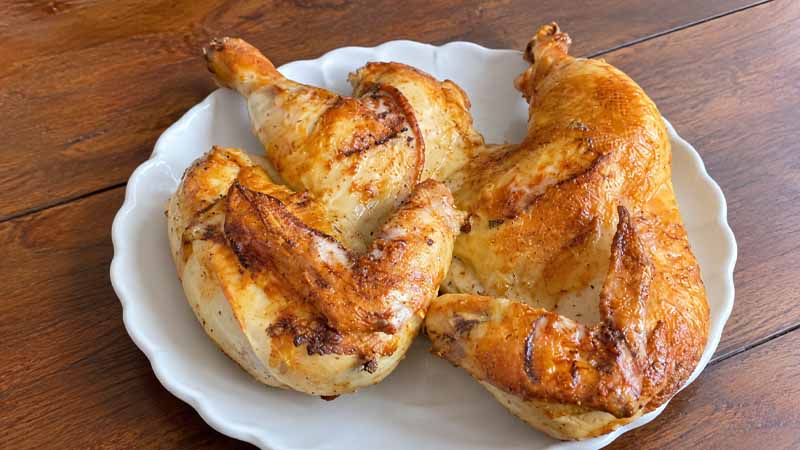
Cornell Chicken earns its signature juicy texture and crisp, tangy crust from a unique apple cider vinegar and egg emulsion.
This classic recipe offers a distinct approach to outdoor grilling that produces consistent results every time.
Whether preparing for a summer backyard gathering or replicating regional fair traditions, mastering this emulsion technique elevates standard grilled poultry.
Below is the complete guide to preparing, marinating, grilling, and serving Cornell Chicken.
Recipe Key Metrics
- Prep Time: 15 minutes
- Marinating Time: 2 to 4 hours (or overnight for maximum flavor penetration)
- Cook Time: 45 to 60 minutes
- Total Active Time: Approximately 1 hour to 1 hour 15 minutes (excluding marinade time)
- Yield: 4 to 6 servings
Ingredients List
To ensure accurate flavor balance and proper emulsion structure, measure all liquid and dry components carefully.
Main Protein
- 1 whole broiler-fryer chicken (3 to 3.5 lbs), cut in half or quartered
State Fair Marinade and Baste
- 1 large egg
- 1 cup vegetable oil
- 2 cups apple cider vinegar
- 3 tablespoons salt
- 1 tablespoon poultry seasoning
- ½ teaspoon ground black pepper
Required Equipment Checklist
Having the right tools ready before starting ensures smooth execution during emulsification, temperature monitoring, and fire control.
- High-Speed Blender: Essential for building the oil and egg emulsion.
- Large Resealable Plastic Bag: Used for holding and coating the chicken halves in marinade.
- Clean Storage Container: Required to keep 1 cup of clean basting sauce isolated from raw poultry.
- Paper Towels: Needed to pat chicken pieces dry prior to initial searing.
- Outdoor Charcoal or Gas Grill: Configured for two-zone cooking (direct and indirect heat).
- Basting Brush: For applying sauce after each turn during indirect cooking.
- Instant-Read Meat Thermometer: Crucial for confirming an internal target temperature of 165°F (74°C).
- Spray Bottle filled with Water: Keeps wild flare-ups controlled when oil drips onto hot coals.
- Baking Dish (Optional): Used if baking indoors in an oven.
- Serving Platter: For holding finished chicken during its rest phase.
Step-by-Step Preparation and Cooking Guide
Follow these exact steps to prepare the emulsion, soak the chicken, set up two-zone heat, and finish cooking safely.
Step 1: Emulsifying the Sauce
- Crack 1 large egg into a clean blender jar.
- Pulse the blender briefly until the egg is thoroughly beaten.
- While keeping the blender motor running continuously, slowly pour in 1 cup of vegetable oil in a thin stream until a thick, smooth emulsion forms.
- Add 2 cups of apple cider vinegar, 3 tablespoons of salt, 1 tablespoon of poultry seasoning, and ½ teaspoon of ground black pepper.
- Blend all ingredients together until completely smooth and integrated.
Step 2: Marinating the Poultry
- Take your 3 to 3.5 lb whole broiler-fryer chicken (halved or quartered) and place the pieces inside a large, resealable plastic bag.
- Measure out exactly 1 cup of the prepared sauce and pour it into a clean separate container; set this aside in the refrigerator for basting later.
- Pour the remaining marinade directly into the plastic bag over the chicken, ensuring every piece is coated thoroughly.
- Press excess air out of the plastic bag, seal tightly, and place it in the refrigerator.
- Chill for at least 2 to 4 hours, or leave overnight for maximum flavor penetration.
Step 3: Setting Up the Outdoor Grill
- Preheat an outdoor charcoal or gas grill to medium-high heat.
- Clean and lightly oil the grill grates to prevent skin from sticking.
- If using a charcoal grill, bank all hot coals onto one side of the lower grate. This setup establishes both a direct heat zone (directly over the coals) and an indirect heat zone (the empty side of the grill grate).
Step 4: Searing the Skin
- Remove the chicken pieces from the plastic bag marinade.
- Gently pat the exterior skin dry using paper towels.
- Safely discard the used marinade remaining in the plastic bag.
- Lay the chicken pieces skin-side down over direct heat for 2 minutes.
- This initial sear crisping locks in interior juices and establishes skin structure.
Step 5: Indirect Grilling and Systematic Basting
- Move the seared chicken pieces away from direct coals over to the indirect heat side of the grill grate.
- Position the chicken pieces skin-side up.
- Close the grill lid to maintain ambient cooking temperature.
- Cook for 35 to 45 minutes, turning the chicken halves every 10 minutes.
- After every turn, generously brush the top surface with the reserved clean marinade from your clean container.
Step 6: Checking Final Temperature and Resting
- Insert an instant-read thermometer into the thickest part of the chicken thigh, taking care not to touch bone.
- The chicken is finished when the skin achieves a crisp coating and the internal temperature reaches 165°F (74°C).
- Transfer the chicken halves to a clean serving platter.
- Allow the meat to rest for 5 to 10 minutes before carving to allow juices to redistribute evenly.
Indoor Baking Alternative Instructions
If weather prevents outdoor grilling, you can adapt this recipe for indoor oven cooking without losing flavor quality.
- Preheat your kitchen oven to 375°F (190°C).
- Remove chicken halves from marinade, pat dry with paper towels, and place them skin-side up in a baking dish.
- Bake for approximately 1 hour total.
- Periodically brush the top of the chicken halves with the reserved clean marinade during the baking process.
- Verify that the thickest section of the thigh reads 165°F (74°C) on a digital thermometer before removing from the oven.
Safety Guidelines and Flare-Up Management
Handling oil-based marinades on hot charcoal requires caution to protect both the cook and the food.
- Managing Oil Fires: Because the marinade contains 1 cup of vegetable oil, dripping fat will fall onto hot coals during grilling. This dripping fat can trigger sudden flare-ups. Keep a spray bottle filled with clean water right beside the grill to safely douse wild flames before they scorch the chicken skin.
- Contamination Prevention: Never use the bag marinade that touched raw chicken for basting cooked meat. Reserving 1 cup of clean sauce in a separate container before adding raw meat ensures complete food safety.