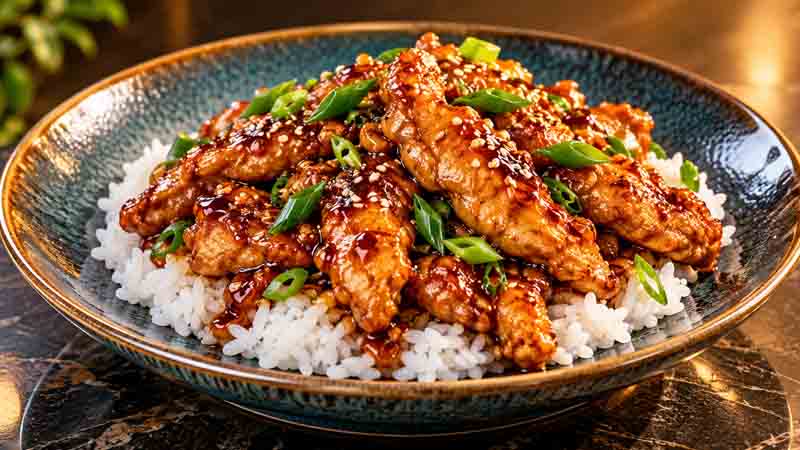
This Mongolian chicken recipe is a quick, flavorful dinner featuring tender chicken strips coated in cornstarch, pan-seared until golden, and tossed in a glossy garlic, ginger, and soy sauce glaze.
The combination of brown sugar, rice vinegar, sesame oil, and Sriracha creates a delicious balance of sweetness, savory depth, and gentle heat.
Ready in just 30 minutes, this easy stovetop meal requires no marinating and makes four satisfying servings. Serve it over warm rice for a homemade takeout-style dinner that fits perfectly into a busy weeknight schedule.
Recipe Details
| Detail | Information |
|---|---|
| Preparation Time | 10 minutes |
| Cooking Time | 20 minutes |
| Total Time | 30 minutes |
| Servings | 4 |
| Cooking Method | Stovetop |
| Cuisine | Mongolian-inspired |
| Course | Main course |
| Difficulty | Easy |
Ingredients You’ll Need
This recipe uses everyday ingredients to create a flavorful sauce and beautifully browned chicken without complicated preparation.
For the Chicken
- 1 pound chicken breast tenderloins: Slice into thin, evenly sized strips so they cook quickly and consistently.
- ¼ cup cornstarch: Coats the chicken to encourage browning and create a lightly crispy surface.
- 2 tablespoons vegetable oil: Provides the cooking fat needed to sear the chicken in a hot skillet.
For the Mongolian Sauce
- ½ cup soy sauce: Forms the savory foundation of the glaze.
- ¼ cup brown sugar: Adds sweetness and helps create a glossy, thickened sauce.
- 1 teaspoon minced garlic: Provides a rich, aromatic flavor.
- 1 teaspoon ginger puree: Adds warm, slightly peppery notes.
- 1 teaspoon Sriracha sauce: Brings a mild spicy kick that balances the sweetness.
- 1 tablespoon sesame oil: Contributes a distinctive toasted sesame aroma.
- 1 tablespoon rice vinegar: Adds acidity to balance the rich sauce.
For Garnishing
- 4 green onions, chopped: Add a fresh, crisp finish and a touch of color.
How to Make Mongolian Chicken
Step 1: Prepare the Chicken
Slice the chicken tenderloins into thin strips of similar thickness to encourage even cooking. Place the pieces in a large resealable plastic bag, add the cornstarch, and seal the bag securely.
Shake until all the chicken is coated in an even layer. Separate any pieces that stick together so each strip can brown properly in the skillet.
Step 2: Sear Until Golden
Heat the vegetable oil in a large skillet over medium-high heat. Once the oil is hot, arrange the coated chicken in the skillet in a single layer, working in batches if necessary to avoid overcrowding.
Cook for approximately 5 minutes on each side, turning as needed, until the exterior is golden brown and the chicken is cooked through. The internal temperature should reach 165°F (74°C).
Transfer the cooked chicken to a paper towel-lined plate to absorb any excess oil. Set aside while you prepare the sauce.
Step 3: Mix the Sauce
In a medium bowl, whisk together the soy sauce, brown sugar, minced garlic, ginger puree, Sriracha, sesame oil, and rice vinegar.
Continue mixing until the sugar begins to dissolve and the ingredients are evenly combined. Preparing the sauce before adding it to the skillet makes the cooking process easier and helps prevent the garlic from burning.
Step 4: Simmer Until Thickened
Pour the prepared sauce into the warm skillet. Bring the mixture to a boil over medium-high heat, stirring occasionally to prevent the sugar from sticking to the bottom.
Reduce the heat and allow the sauce to simmer for approximately 3 minutes. It should gradually become thicker, darker, and glossy enough to coat the back of a spoon.
Keep an eye on the mixture as it reduces because sugary sauces can burn if left unattended.
Step 5: Combine and Finish
Return the cooked chicken to the skillet and add the chopped green onions. Toss everything together until the chicken is evenly covered with the sauce.
Continue cooking for another 2 minutes, stirring gently to distribute the glaze and warm the ingredients through. Remove the skillet from the heat once the sauce clings to the chicken.
Serve immediately while the chicken is hot and the coating is still glossy.
Helpful Tips for Perfect Mongolian Chicken
Avoid Overcrowding the Skillet
For properly browned chicken, arrange the strips in a single layer with a little space between them. Overcrowding traps moisture and can prevent the coating from becoming golden and crisp. Cook in multiple batches if your skillet is not large enough.
Use Low-Sodium Soy Sauce
Regular soy sauce gives this dish its characteristic savory flavor, but it also contributes a considerable amount of sodium. Low-sodium soy sauce is a useful substitute if you want to reduce the saltiness without losing the familiar taste.
If you prefer plenty of glaze for your rice, you can increase the sauce quantities while adjusting the seasoning to taste.
Adjust the Sweetness and Heat
The brown sugar provides the signature sweetness, while Sriracha adds a little heat. For a less sweet sauce, reduce the sugar slightly. If you enjoy spicier meals, increase the Sriracha gradually until the sauce reaches your preferred level.
Taste the sauce before adding the chicken and make small adjustments to its balance of sweetness, acidity, and spice.
Add Vegetables for a Complete Meal
This recipe is easy to adapt with vegetables already in your refrigerator. Shredded carrots and thinly sliced red bell peppers are suitable additions because they cook quickly and complement the sweet and savory glaze.
Add the vegetables during the final simmer, allowing enough time for them to soften slightly while retaining some texture.
Try an Air Fryer
For a version that uses less added cooking oil, cook the cornstarch-coated chicken in an air fryer. Arrange the pieces in a single layer, lightly spray with cooking oil if desired, and cook at approximately 400°F (200°C), turning halfway through.
Cooking time will vary depending on the thickness of the strips and your appliance, so check that the chicken reaches 165°F (74°C).
Prepare and thicken the sauce separately in a skillet, then toss the cooked chicken in the glaze just before serving.
Easy Ingredient Substitutions
- Cornstarch: Rice flour can be used as an alternative coating, although the texture may be slightly different.
- Green onions: Scallions can be used interchangeably for the garnish.
- Vegetable oil: Another neutral cooking oil with a suitable high smoke point can be substituted.
- Fresh ginger: Finely grated fresh ginger can replace the ginger puree. Adjust the quantity according to its strength and your taste.
- Rice vinegar: If necessary, another mild vinegar can provide acidity, but use it sparingly to avoid overpowering the sauce.
What to Serve with Mongolian Chicken
Steamed white rice is a classic accompaniment because it absorbs the rich sauce and balances the bold flavors. Brown rice is another option for a heartier meal with a slightly nutty taste.
You can also serve this dish with:
- Steamed broccoli or sautéed green beans.
- Stir-fried vegetables such as carrots, bell peppers, and snap peas.
- Noodles tossed with a little sesame oil.
- Cauliflower rice for an alternative to traditional rice.
For a simple presentation, arrange the chicken over a bed of freshly cooked rice and spoon any remaining glaze over the top. Finish with the green onion garnish.
Nutrition Facts
The following nutritional information is provided per serving, based on four servings. Actual values may vary depending on the ingredients and brands used.
| Nutrient | Amount | Daily Value |
|---|---|---|
| Calories | 327 | — |
| Total Fat | 13g | 17% |
| Saturated Fat | 2g | 12% |
| Cholesterol | 65mg | 22% |
| Sodium | 1,924mg | 84% |
| Total Carbohydrate | 26g | 9% |
| Dietary Fiber | 1g | 3% |
| Total Sugars | 14g | — |
| Protein | 26g | 52% |
| Vitamin C | 3mg | 4% |
| Calcium | 43mg | 3% |
| Iron | 2mg | 11% |
| Potassium | 345mg | 7% |
Percentages are based on a standard 2,000-calorie daily diet.
Final Thoughts
This homemade Mongolian chicken brings together crisp-edged chicken, a rich garlic-ginger glaze, and a touch of sweetness in a simple skillet meal.
With straightforward preparation and flexible ingredients, it is an easy recipe to adapt for different spice preferences and serving styles.
Pair it with rice and your favorite vegetables for a satisfying dinner, or prepare extra portions for convenient lunches throughout the week.