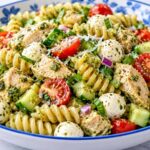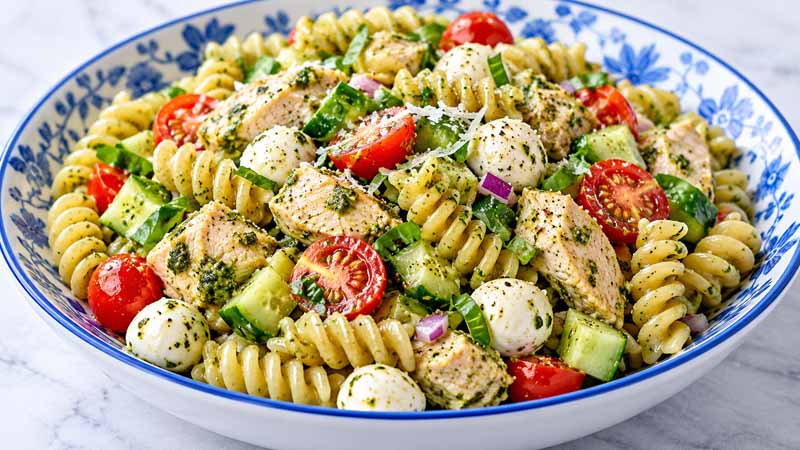
This Pesto Chicken Pasta Salad Recipe brings together tender chicken, twisty pasta, juicy cherry tomatoes, and creamy mozzarella in a lemony basil pesto dressing.
It is filling enough for lunch, easy to pack, and a welcome addition to a picnic or family dinner.
The pesto does most of the flavor work, coating the pasta with basil, garlic, and Parmesan.
Cucumber adds crunch, while fresh lemon juice keeps the dressing bright. Using cooked chicken makes preparation simple, and a short chill gives the ingredients time to come together.
Recipe Overview
- Preparation time: 20 minutes
- Cooking time: 10 minutes
- Chilling time: 30 minutes
- Total time: 1 hour
- Servings: 6 main-dish portions
- Cooking method: Stovetop
- Serving style: Chilled
The timing assumes your chicken is already cooked and chilled. Pasta cooking time may vary slightly by brand and shape.
Ingredients
For the Salad
- 12 ounces (340 grams) dry rotini pasta
- 3 cups (420 grams) cooked, skinless chicken breast, cut into bite-size pieces
- 1½ cups (225 grams) cherry tomatoes, halved
- 1 cup (130 grams) diced English cucumber
- 4 ounces (113 grams) fresh mozzarella pearls, drained
- ¼ cup (35 grams) finely diced red onion
- ¼ cup (20 grams) finely grated Parmesan cheese
- ¼ cup loosely packed fresh basil leaves, thinly sliced
For the Pesto Dressing
- ½ cup (120 grams) prepared basil pesto
- 2 tablespoons extra-virgin olive oil
- 2 tablespoons freshly squeezed lemon juice
- 2 tablespoons cold water
- ¼ teaspoon fine salt
- ¼ teaspoon freshly ground black pepper
Use a basil pesto you enjoy on its own, since its flavor carries through the whole salad. Stir jarred pesto before measuring so the oil and basil mixture are evenly combined.
Directions: How to Make Pesto Chicken Pasta Salad Recipe
1. Prepare your ingredients and equipment.
Gather a large pot, colander, cutting board, small mixing bowl, and large salad bowl. Wash the tomatoes, cucumber, and basil, then dry them well. Extra moisture can collect at the bottom of the bowl and dilute the dressing.
Cut the chicken into pieces small enough to fit comfortably on a fork. Remove any skin, bones, or cartilage if using rotisserie chicken.
2. Cook the pasta.
Bring a large pot of water to a rolling boil. Add the rotini and stir immediately to separate the pieces. Cook according to the package directions, usually 8–10 minutes, stirring occasionally.
Start checking a minute before the suggested cooking time ends. The pasta should be tender with a slight firmness in the center. Avoid leaving it noticeably hard, because chilling makes pasta feel firmer.
Rotini works especially well because its grooves hold the pesto. Fusilli, farfalle, or small penne are suitable substitutes.
3. Cool and drain thoroughly.
Drain the pasta in a colander, then rinse briefly under cool running water to stop the cooking. Shake the colander gently and let the pasta drain thoroughly.
For this cold salad, a brief rinse helps cool the pasta quickly and keeps the pieces separate. Do not leave it soaking in water. Transfer the drained pasta to your large mixing bowl.
4. Prepare the vegetables and cheese.
Halve the cherry tomatoes, dice the cucumber, and finely chop the red onion. Keep the cucumber pieces similar in size so each serving has an even mix of ingredients.
If your cucumber has a large, watery seed center, scoop that out before dicing. Drain the mozzarella pearls well and cut larger pieces in half.
For milder onion flavor, rinse the chopped onion under cold water, then drain and pat dry before adding it.
5. Mix the pesto dressing.
In the small bowl, whisk together the pesto, olive oil, lemon juice, cold water, salt, and black pepper.
The dressing should pour easily while remaining thick enough to coat the pasta. The measured water loosens the pesto without adding more oil. Taste it before combining: it should have a clear basil flavor with a gentle lemon tang.
Because prepared pesto varies in saltiness, avoid adding extra salt until you have tasted the finished salad.
6. Combine the salad.
Add the chicken, tomatoes, cucumber, mozzarella, and red onion to the cooled pasta. Pour over the dressing and toss gently with two large spoons.
Lift ingredients from the bottom of the bowl as you mix so the dressing reaches everything. Fold in the Parmesan and sliced basil last. Stop once the ingredients are evenly coated to keep the tomatoes and mozzarella intact.
7. Chill before serving.
Cover the salad and refrigerate for at least 30 minutes. This gives the pasta and chicken time to absorb some of the dressing.
Stir again before serving, bringing any dressing from the bottom back through the salad. If it seems dry, mix in cold water one teaspoon at a time until the coating loosens. Taste and adjust the seasoning if needed.
Serve in shallow bowls for lunch or alongside grilled vegetables for dinner.
Storage Instructions
Refrigeration
Transfer the salad to shallow, covered containers and refrigerate promptly at 40°F (4°C) or below. Use within 3–4 days, counting from when the chicken was originally cooked. Mixing older cooked chicken into a fresh salad does not restart its storage period.
Safe serving
Keep the salad refrigerated until needed. Discard it if it has been left unrefrigerated for more than 2 hours, or 1 hour when temperatures exceed 90°F (32°C). For outdoor meals, transport it in an insulated cooler with ice packs.
Make-ahead preparation
Prepare the salad up to one day ahead for the best texture. Store the sliced basil separately and fold it in shortly before serving. You can also refrigerate the dressing separately, then toss everything together 30 minutes before the meal.
Freezing
Freezing the assembled salad is not recommended for quality. Thawed cucumber and tomatoes can become watery, and the mozzarella may lose its smooth texture.
Nutrition Facts
Estimated nutrition per serving, based on six equal portions:
| Nutrient | Estimated amount |
|---|---|
| Calories | 540 kcal |
| Protein | 35 g |
| Carbohydrates | 47 g |
| Total fat | 23 g |
| Saturated fat | 6 g |
| Fiber | 3 g |
| Sodium | 560 mg |
Estimates use the listed quantities, plain cooked chicken breast, regular wheat pasta, and typical prepared basil pesto.
Actual values vary by pesto brand, chicken seasoning, cheese, and portion size. Rotisserie chicken and salt added to the pasta water can increase sodium.