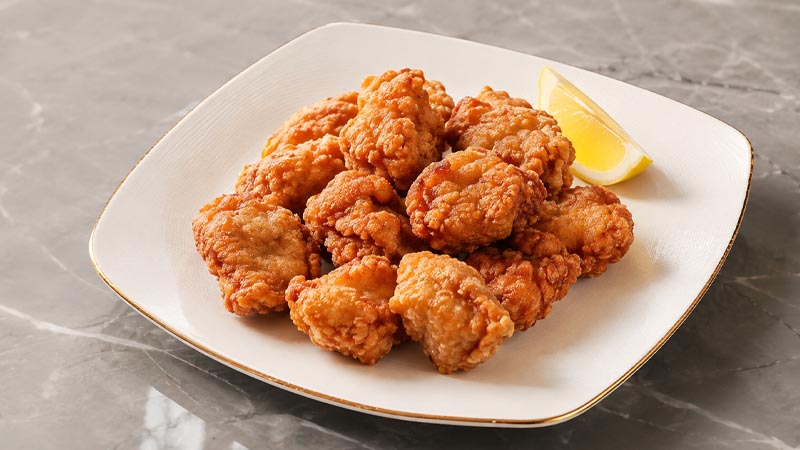
Karaage is a classic Japanese comfort food beloved for its shatteringly crisp exterior and incredibly juicy, savory interior.
Bone-in skinless chicken thighs are bathed in an aromatic soy-ginger marinade before being dredged in potato starch and fried to golden perfection.
Whether you’re looking for a quick single-fry dinner or a ultra-crunchy double-fry bite perfect for meal prepping and parties, this guide covers everything you need to know.
Key Recipe Overview
- Prep Time: 20 minutes
- Resting/Marinating Time: 1 hour 15 minutes (up to 10 hours)
- Cook Time: 10 minutes
- Servings: 4
Essential Ingredients
For the Marinade:
- Fresh Ginger: 1 tbsp, freshly grated
- Garlic: 1 clove, finely grated
- Soy Sauce: 3 tbsp
- Sake (Japanese Rice Wine): 3 tbsp
- Mirin: 1 tbsp
- Toasted Sesame Oil: ⅛ tsp
- Granulated Sugar: ½ tsp
- Kosher Salt: ¼ tsp
- Ground Black Pepper: ¼ tsp
- Cayenne Pepper: 1 pinch (optional, for subtle background warmth)
For the Chicken & Coating:
- Chicken Thighs: 1.25 lbs, boneless and skinless, trimmed and cut into bite-sized (2-inch) pieces
- Potato Starch: 1 cup (for dredging)
- Cooking Oil: 1 quart neutral high-smoke-point oil (such as canola, peanut, or vegetable oil)
Step-by-Step Cooking Instructions
Step 1: Marinate the Chicken
- In a medium mixing bowl, whisk together the grated ginger, garlic, soy sauce, sake, mirin, sesame oil, sugar, salt, black pepper, and cayenne pepper until the sugar dissolves.
- Add the cut chicken thigh pieces to the bowl. Toss thoroughly until every piece is completely coated in the seasoning liquid.
- Cover the bowl with plastic wrap and chill in the refrigerator for at least 1 hour (for optimal flavor absorption, marinate up to 10 hours).
Step 2: Set Up the Dredging Station
- Prepare a baking sheet by lining it with aluminum foil and placing a wire cooling rack directly over top.
- Pour the potato starch into a wide, shallow dish.
Step 3: Dredge and Rest
- Remove the marinated chicken from the fridge and give it a final mix to redistribute the juices.
- Working in small batches (2–3 pieces at a time), toss the chicken pieces in the potato starch until fully coated. Lightly tap the chicken against your hand to shake off excess starch.
- Arrange the coated chicken pieces in a single layer on the wire rack, making sure they do not touch.
- Once all pieces are dredged, place the wire rack with the chicken back in the refrigerator for 15 to 30 minutes. This crucial resting phase allows the starch to hydrate and bond with the chicken, preventing the coating from falling off in hot oil.
Choose Your Frying Method
Method A: Traditional Single-Fry (Quickest)
- Pour oil into a deep, heavy-bottomed pot or deep fryer until it reaches a depth of at least 2 inches. Heat over medium-high until the oil temperature reaches 350°F (175°C).
- Carefully lower the chicken pieces into the hot oil in batches to avoid crowding the pan.
- Fry for 3 to 4 minutes, turning the pieces occasionally, until the coating becomes light golden brown, crispy, and the chicken reaches an internal temperature of 165°F (74°C).
- Remove with a slotted spoon or spider skimmer and drain on a paper-towel-lined plate.
Method B: Restaurant-Style Double-Fry (Maximum Crunch)
Best for extra crispness, entertaining, or preparing ahead of time.
- First Fry: Heat oil to 350°F (175°C). Fry chicken in batches for only 1.5 to 2 minutes (the chicken will look pale and slightly underdone). Transfer to a wire rack to rest and cool to room temperature for at least 5–10 minutes. (Note: You can refrigerate the chicken at this stage if preparing ahead).
- Second Fry: Reheat the oil back to 350°F (175°C). Return the cooled chicken to the oil and fry for an additional 2 minutes until deep golden brown and extremely crunchy. Drain on paper towels before serving.
Pro Cooking Tips & Substitutions
Starch Choice: Potato starch (katakuriko) yields the light, ultra-crispy shell signature to authentic Karaage. Cornstarch works as an acceptable 1:1 substitute if needed.
However, do not use potato flour, as it absorbs oil differently and will result in a dense, gummy texture.
- Mirin Swap: If mirin is unavailable, replace it with 1 tablespoon of extra sake mixed with 1 additional teaspoon of granulated sugar.
- Serving Suggestion: Serve hot alongside fresh lemon or lime wedges, a side of Japanese mayonnaise (Kewpie), and steamed rice.
Nutritional Profile
Values are estimates per serving based on 4 servings, accounting for average oil absorption.
| Nutrient | Amount per Serving | % Daily Value* |
| Calories | 479 kcal | — |
| Total Fat | 33 g | 42% |
| Saturated Fat | 5 g | 25% |
| Cholesterol | 173 mg | 58% |
| Sodium | 992 mg | 43% |
| Total Carbohydrates | 9 g | 3% |
| Dietary Fiber | 1 g | 3% |
| Total Sugars | 2 g | — |
| Protein | 36 g | 72% |
| Calcium | 28 mg | 2% |
| Iron | 2 mg | 10% |
| Potassium | 513 mg | 11% |
*Percent Daily Values are based on a standard 2,000-calorie diet.