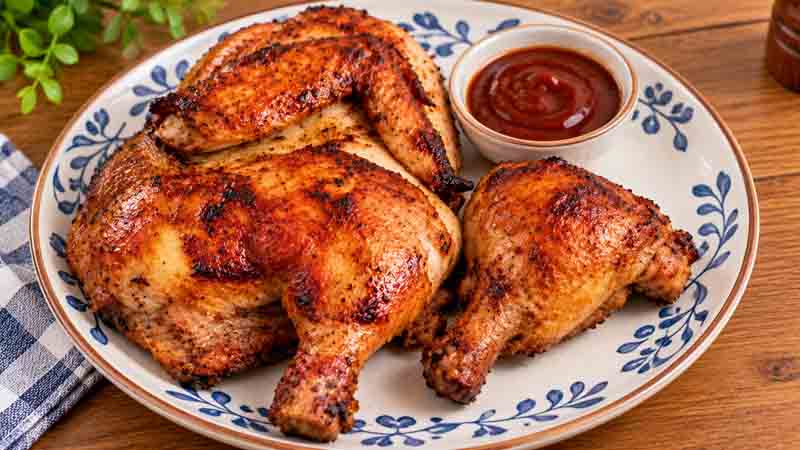
Grilling chicken over open flames completely transforms traditional butter chicken by adding an irresistible charred finish and rich smokiness. This barbecued butter chicken recipe adapts classic flavors into grilled skewers served over warm flatbread.
By combining a spiced curry yogurt marinade with generous butter basting during grilling, this dish achieves restaurant-quality texture and deep flavor in minimal cooking time.
Recipe Key Highlights & Quick Overview
- Preparation Time: 15 minutes (plus 1 hour for marinating)
- Cooking Time: 10 minutes
- Total Time: 1 hour 25 minutes
- Yield: 4 servings (12 chicken skewers)
- Cooking Method: Medium-high heat grilling / chargrilling
- Target Internal Temperature: 165°F (74°C)
Ingredients for Barbecued Butter Chicken
To prepare these grilled butter chicken skewers, gather the following twelve ingredients:
Main Marinade & Chicken
- Chicken Breast Fillets: 700g, sliced into long, thin strips.
- Butter Chicken Curry Paste: 80g (1/3 cup).
- Natural Greek Yogurt: 90g (1/3 cup).
Grilling & Basting Essentials
- Unsalted Butter: 50g, melted (reserved for basting during the final grilling phase).
- Olive Oil or Cooking Spray: 1 tablespoon (used to grease the grill grates).
Serving & Garnishing Components
- Naan Breads: 4 pieces.
- Lebanese Cucumber: 1 whole cucumber, peeled into thin ribbons.
- Extra Natural Greek Yogurt: For drizzling over assembled plates.
- Fresh Coriander: Finely chopped for garnish.
Optional Side Gravy Ingredients
- Tomato Paste, Heavy Cream, Garam Masala, and Butter: Combined to simmer a quick traditional side sauce if extra gravy is desired.
Kitchen & Barbecue Equipment Needed
- 12 Wooden Bamboo or Metal Skewers: If using bamboo skewers, soak them in water prior to grilling.
- Outdoor Barbecue Grill or Stovetop Chargrill Pan: Set to medium-high heat.
- Large Mixing Bowl: For whisking the marinade ingredients.
- Basting Brush: For applying melted butter while grilling.
- Digital Meat Thermometer: To verify food safety and doneness.
- Aluminum Foil: For covering and resting cooked meat.
Step-by-Step Cooking Instructions
Step 1: Prepare and Whisk the Yogurt Marinade
In a large mixing bowl, whisk together 80g (1/3 cup) of butter chicken curry paste and 90g (1/3 cup) of natural Greek yogurt until thoroughly combined. Place the 700g of sliced chicken breast strips into the bowl.
Toss the chicken thoroughly to ensure every strip is completely coated with marinade. Cover the bowl and place it in the refrigerator to infuse for at least 1 hour.
For maximum flavor penetration and optimal tenderness, allow the chicken to marinate overnight.
Step 2: Soak and Thread the Skewers
If you are using bamboo skewers, submerge them in water for 30 minutes before grilling to prevent the wooden sticks from burning over the flames.
Remove the marinated chicken from the refrigerator. Thread the marinated chicken strips tightly onto 12 individual skewers.
Step 3: Preheat and Oil the Grill Grates
Preheat your outdoor barbecue grill or heavy chargrill pan to medium-high heat. Lightly spray or brush the hot grill grates with 1 tablespoon of olive oil or cooking spray to prevent sticking.
Step 4: Grill and Baste with Melted Butter
Arrange the 12 chicken skewers evenly across the preheated grill grates. Grill the chicken for 8 to 10 minutes total, turning the skewers occasionally to achieve even searing and cooked edges on all sides.
During the final few minutes of cooking, generously baste the chicken with 50g of melted unsalted butter using a basting brush. This step locks in moisture and adds richness.
Use a digital meat thermometer to confirm that the thickest portion of the chicken reaches an internal temperature of 165°F (74°C).
Step 5: Rest the Meat and Warm the Naan
Once fully cooked, transfer the chicken skewers onto a clean plate and loosely cover them with aluminum foil to rest. Place the 4 naan breads directly onto the hot grill grates.
Warm each naan for approximately 1 minute per side until heated through and lightly charred.
Step 6: Assemble and Garnish for Serving
Place warm naan flatbread onto individual serving plates. Top each naan with the barbecued butter chicken skewers. Add crisp Lebanese cucumber ribbons, a dollop of extra Greek yogurt, and a sprinkle of chopped fresh coriander.
Pro Tips for Barbecued Butter Chicken
- Alternative Poultry Cut: For extra juicy meat that resists drying out under high barbecue temperatures, substitute chicken breasts with boneless, skinless chicken thighs.
- Simmering an Extra Gravy: If you prefer serving skewers with rich gravy, combine tomato paste, heavy cream, garam masala, and butter in a pan. Simmer this mixture on your grill’s side burner to drizzle over the finished skewers.
- Preventing Stickage: Ensure your grill grates are thoroughly cleaned and oiled before adding marinated chicken.