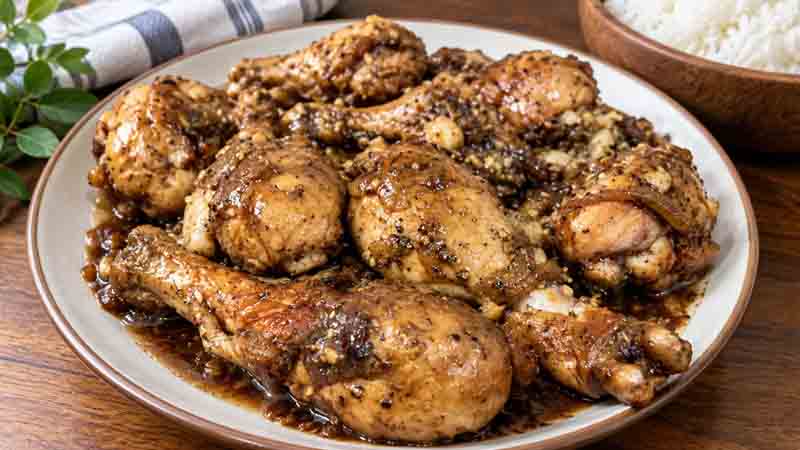
Filipino Chicken Adobo is recognized as the famous, unofficial national dish of the Philippines. It is celebrated for its balance of savory soy sauce, tangy vinegar, sweet sugar, and heavy garlic.
This classic recipe yields tender, juicy chicken coated in a deeply caramelized, glossy glaze. Whether preparing a weeknight dinner or mastering traditional home cooking, this guide outlines every detail required to craft authentic Chicken Adobo.
Recipe Overview and Timings
- Prep Time: 15 minutes (plus marinating time)
- Cook Time: 45 minutes
- Total Yield: 4 to 6 servings
Essential Ingredients Breakdown
Protein and Base Aromatics
- Chicken: 1 kg (approximately 2.2 lbs) of bone-in, skin-on chicken thighs or drumsticks
- Garlic: 1 whole head (8 to 10 cloves), heavily crushed or minced
- Onion: 1 large yellow or brown onion, sliced
- Bay Leaves: 3 to 4 pieces of dried bay leaves
Liquids, Oils, and Seasonings
- Soy Sauce: ½ cup (preferably a Filipino brand such as Silver Swan)
- White Vinegar: ½ cup (cane vinegar or coconut vinegar preferred)
- Water: 1 cup
- Black Peppercorns: 1 tablespoon of whole black peppercorns
- Sugar: 2 tablespoons of brown sugar or palm sugar
- Cooking Oil: 2 tablespoons of cooking oil
Step-by-Step Cooking Instructions
Step 1: Marinate the Chicken for Deep Flavor
Begin by combining the chicken, soy sauce, white vinegar, half of the crushed garlic, dried bay leaves, and whole black peppercorns in a large bowl. Allow the chicken to marinate for a minimum of 30 minutes.
For the deepest flavor profile, let the chicken marinate overnight in the refrigerator.
Step 2: Sear the Chicken
Remove the chicken pieces from the marinade, taking care to preserve all the marinade liquid for the simmering stage. Heat 2 tablespoons of cooking oil in a large skillet over medium-high heat.
Place the chicken skin-side down into the skillet and sear for 3 to 5 minutes until it achieves a golden brown color. Flip the chicken pieces and sear the opposite side. Once seared, remove the chicken from the skillet and set it aside.
Step 3: Sauté the Aromatics
In the same skillet containing the leftover chicken fat, add the remaining half of the garlic along with the sliced onions. Sauté the garlic and onions for 2 to 3 minutes until the onions soften and turn golden brown.
Step 4: Simmer the Chicken and Sauce
Pour the reserved marinade liquid, 1 cup of water, and 2 tablespoons of brown or palm sugar into the skillet. Bring the mixture to a complete boil.
Return the seared chicken to the skillet, reduce the heat to medium-low, cover with a lid, and allow it to simmer for 25 to 30 minutes until the chicken becomes tender.
Step 5: Reduce the Sauce into a Glossy Glaze
Remove the lid from the skillet and turn the heat up to high. Allow the sauce to boil and reduce for another 10 minutes while basting the chicken frequently. Continue this process until the liquid transforms into a thick, glossy glaze.
Visual techniques for searing and glaze reduction can also be observed in step-by-step cooking tutorials.
Step 6: Plating and Serving Suggestions
Plate the chicken hot over a generous bed of steamed Jasmine rice. Drizzle the remaining savory glaze directly over the top of the chicken and rice before serving.
Essential Chef’s Pro Tips for Success
The Vinegar Rule
When the marinade liquid is first added to the pot, do not stir it immediately. Allow the vinegar to boil uncovered for one minute so that its harsh, raw acidic edge boils off before stirring.
Why Bone-In Thighs Matter
Always choose bone-in, skin-on chicken thighs or legs rather than chicken breasts. The natural fat rendering from the skin is essential to emulsify with the vinegar and soy sauce, creating the signature sticky glaze.
Flavor Development Overnight
Adobo is renowned for tasting even better the following day. As it sits overnight, the cooked meat continues to absorb the tangy and salty sauce flavors.