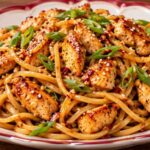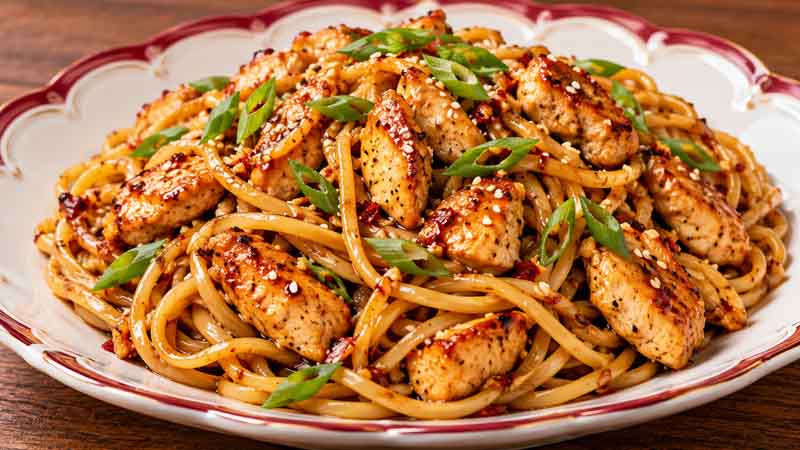
One-Pan Spicy Soy Noodles with Chicken is a flavorful 30-minute dinner featuring juicy chicken breast, tender linguine, fresh garlic, ginger, and a savory, spicy soy sauce glaze.
Everything cooks together in one skillet, allowing the pasta to absorb the rich flavors of the broth while creating a naturally thickened sauce.
With only 10 minutes of preparation and approximately 20 minutes of cooking, this recipe is a convenient option for busy weeknights.
The combination of brown sugar, soy sauce, vinegar, and red pepper flakes creates a balanced mixture of sweetness, tanginess, and heat. Best of all, cooking the noodles and chicken in the same pan means fewer dishes to wash after dinner.
Recipe Details
- Prep Time: 10 minutes
- Cook Time: 20 minutes
- Total Time: 30 minutes
- Servings: 4
- Cooking Method: One-pan skillet
- Cuisine: Asian-inspired
- Difficulty: Easy
Ingredients
For the Chicken
- 1 1/4 pounds boneless, skinless chicken breasts or tenders, cut into 1-inch pieces
- 1/2 teaspoon garlic powder
- 1/2 teaspoon paprika
- 1 1/2 teaspoons kosher salt
- 1/2 teaspoon freshly ground black pepper
- 1 tablespoon neutral cooking oil
For the Noodles and Sauce
- 8 ounces uncooked linguine
- 1 1/2 cups water
- 1/4 cup soy sauce
- 2 tablespoons apple cider vinegar
- 1 tablespoon neutral cooking oil
- 2 teaspoons sesame oil
- 2 garlic cloves, minced
- 1 tablespoon fresh ginger, minced
- 1/4 teaspoon crushed red pepper flakes
- 2 tablespoons brown sugar
For Garnishing
- 3 green onions, thinly sliced
- 2 teaspoons sesame seeds
- Additional crushed red pepper flakes, optional
Instructions
Step 1: Prepare and Season the Chicken
Cut the chicken into evenly sized pieces to help them cook at a consistent rate. Place the chicken in a mixing bowl and add the garlic powder, paprika, kosher salt, and black pepper. Toss until each piece is thoroughly coated with the seasoning mixture.
In a separate bowl or measuring jug, combine the water, soy sauce, and apple cider vinegar. Stir until blended and set aside for later.
Step 2: Brown the Chicken
Heat 1 tablespoon of neutral cooking oil in a large, deep skillet over medium-high heat. Once the oil is hot, arrange the seasoned chicken in the pan in a single layer.
Cook, stirring occasionally, until the pieces develop a golden-brown exterior. They do not need to be completely cooked at this stage because they will finish cooking with the noodles. Transfer the chicken to a clean plate, keeping any juices that collect for the sauce.
Step 3: Cook the Garlic and Ginger
Add the remaining tablespoon of neutral oil and the sesame oil to the same skillet. Reduce the heat slightly if necessary to prevent the aromatics from burning.
Stir in the minced garlic and fresh ginger. Cook for approximately 1 minute, stirring continuously, until fragrant. Add the crushed red pepper flakes and mix them into the oil to distribute the heat throughout the dish.
Step 4: Add the Linguine
Place the uncooked linguine directly into the skillet with the aromatic oil. Stir and turn the pasta to coat it with the garlic, ginger, and red pepper mixture.
Pour the prepared soy sauce liquid over the noodles. Use a wooden spoon or spatula to scrape the bottom of the skillet, loosening the browned bits left behind from searing the chicken. These add extra flavor to the cooking liquid.
Step 5: Simmer the Chicken and Pasta
Bring the liquid to a boil, then reduce the heat to maintain a steady simmer. Return the browned chicken to the skillet, including any accumulated juices from the plate.
Stir in the brown sugar until it dissolves into the sauce. Arrange the linguine as evenly as possible in the liquid, turning the noodles occasionally so they cook uniformly.
Continue simmering for 10 to 12 minutes, stirring periodically to prevent sticking. If the liquid evaporates before the pasta becomes tender, add a little extra water at a time. Keep the pan moist enough for the linguine to finish cooking.
Step 6: Thicken the Sauce and Finish
Once the pasta is tender and the chicken is fully cooked, check the consistency of the sauce. The remaining liquid should have reduced to a glossy glaze that coats the noodles.
Remove the skillet from the heat. Scatter the sliced green onions and sesame seeds over the top, adding more crushed red pepper flakes if you prefer extra spice.
Serve immediately while the noodles are hot and the sauce is freshly thickened.
Tips for Making Perfect One-Pan Spicy Soy Noodles
- Choose a large, deep skillet: A wide pan with enough depth makes it easier to keep the linguine submerged and gives you room to stir without spilling the sauce.
- Cut the chicken evenly: Uniform pieces cook more consistently and help prevent some pieces from drying out while others finish cooking.
- Stir the noodles regularly: Pasta cooked directly in sauce can stick to the pan. Turn and separate the strands every few minutes to encourage even cooking.
- Adjust the cooking liquid as needed: Different pans and stovetops cause liquid to evaporate at different rates. Add small splashes of water whenever the noodles need more moisture.
- Avoid overcooking the chicken: Brown the chicken first, then allow it to finish cooking during the simmering stage. Check that the thickest pieces reach an internal temperature of 165°F.
- Balance the heat: The crushed red pepper flakes provide the spice, while brown sugar softens the sharpness of the soy sauce and vinegar. Adjust the pepper to suit your preference.
Variations and Substitutions
Add More Vegetables
Make this skillet dinner more colorful by including vegetables such as broccoli, carrots, and water chestnuts. Frozen stir-fry vegetables are convenient and can be added during the simmering stage.
Allow enough time for the vegetables to heat through without overcooking the pasta.
Fresh green bell peppers are another option. Slice them into thin strips and sauté them with the garlic and ginger before adding the noodles. This gives the peppers a slightly tender texture while retaining some crispness.
Adjust the Spice Level
For a milder version, reduce or omit the crushed red pepper flakes. If you prefer a hotter sauce, increase the amount gradually or sprinkle additional flakes over individual portions before serving.
Use Low-Sodium Soy Sauce
Traditional soy sauce contributes much of the sodium in this recipe. Low-sodium soy sauce can help reduce the overall salt content. You can also decrease the added kosher salt, tasting the finished dish before adding more.
Try a Different Sauce
Japanese barbecue sauce can be used as an alternative for a sweeter, thicker flavor.
Since it differs from regular soy sauce in sweetness and consistency, adjust the brown sugar and cooking liquid as needed to keep the pasta from becoming too sweet or sticky.
What to Serve with Spicy Soy Chicken Noodles
These noodles can be served as a complete meal on their own, particularly when vegetables are included. For a larger dinner, pair them with a simple cucumber salad, steamed broccoli, or sautéed greens.
A side of lightly dressed cabbage or sliced cucumbers can also provide a refreshing contrast to the warm, savory sauce.
If serving the noodles for a family meal, place extra green onions, sesame seeds, and red pepper flakes on the table so everyone can customize their portion.
Nutrition Information
The following nutrition estimates are per serving, based on four portions.
| Nutrient | Amount |
|---|---|
| Calories | 650 |
| Total Fat | 34g |
| Saturated Fat | 5g |
| Cholesterol | 65mg |
| Sodium | 2,493mg |
| Total Carbohydrates | 54g |
| Dietary Fiber | 4g |
| Total Sugars | 6g |
| Protein | 32g |
| Vitamin C | 3mg |
| Calcium | 75mg |
| Iron | 3mg |
| Potassium | 642mg |
Percent Daily Values are based on a 2,000-calorie diet. Actual nutrition values may vary with ingredient brands, substitutions, and portion sizes.
Final Thoughts
One-Pan Spicy Soy Noodles with Chicken brings together tender chicken, aromatic seasonings, and linguine in a savory sauce that thickens as it cooks.
Preparing everything in one skillet makes this a practical weeknight dinner, while the combination of soy sauce, vinegar, ginger, and brown sugar gives the noodles a distinctive sweet-and-spicy flavor.
With simple ingredient swaps and easy ways to adjust the heat or add vegetables, this recipe can be adapted to suit different tastes. Serve it fresh from the skillet for a satisfying meal with minimal cleanup.