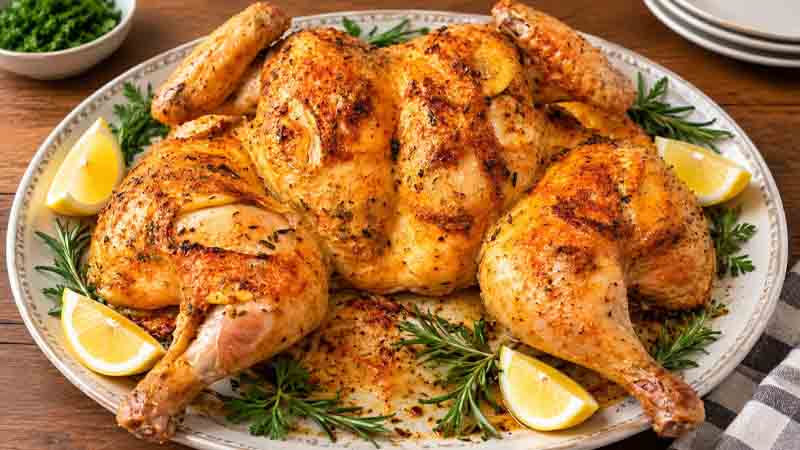
Spatchcocking—also referred to as butterflying—is a technique that involves removing the backbone from a whole chicken so it lays completely flat. This method acts as an effective shortcut for roasting a whole bird.
By flattening the chicken, you achieve uniform browning, crispy skin, and exceptionally juicy meat. Butterflying significantly reduces the total roasting time compared to traditional whole-bird roasting methods.
Recipe Overview
This sheet-pan recipe pairs a flattened chicken with an aromatic compound butter made from garlic, herbs, and lemon zest, cooked alongside hearty root vegetables.
| Recipe Metric | Details |
|---|---|
| Prep Time | 20 minutes |
| Cook Time | 45–50 minutes |
| Total Time | 65–70 minutes |
| Servings | 4 to 6 servings |
| Recipe Difficulty | Easy / Intermediate |
| Cooking Method | Sheet-Pan Oven Roasting |
| Oven Temperature | 425°F (220°C) |
Equipment Needed
Gather the following kitchen equipment to prepare this recipe successfully:
- Sharp Kitchen Shears: Essential for cutting firmly through both sides of the backbone.
- Large Cutting Board: Provides a stable surface for breaking down and flattening the bird.
- Large Rimmed Baking Sheet: Holds the spatchcocked chicken and optional vegetables.
- Parchment Paper: Used to line the baking sheet for easy cleanup.
- Small Mixing Bowl: Needed to combine the softened butter, oil, herbs, and spices into a compound paste.
- Meat Thermometer: Required to accurately verify the internal temperature in the thickest part of the thigh.
- Paper Towels: Used to pat the chicken completely dry prior to seasoning.
- Heavy Chef’s Knife (Optional): Helpful if scoring the sternum cartilage is necessary.
Ingredients for Garlic-Herb Spatchcock Chicken
Main Chicken Ingredient
- 1 Whole Chicken: 4 to 4.5 lbs, patted completely dry with paper towels.
Garlic-Herb Compound Butter Ingredients
- Unsalted Butter: 4 tbsp, softened at room temperature.
- Olive Oil: 2 tbsp.
- Garlic: 4 cloves, minced.
- Fresh Parsley: 1 tbsp, finely chopped.
- Fresh Thyme: 1 tsp, finely chopped.
- Lemon Zest: 1 tsp.
- Lemon Juice: 1 tbsp.
- Kosher Salt: 1.5 tsp.
- Freshly Ground Black Pepper: 0.5 tsp.
- Smoked Paprika: 0.5 tsp.
Optional Sheet-Pan Vegetables
- Baby Red Potatoes: 1.5 lbs, halved.
- Carrots: 2 carrots, cut into 1-inch chunks.
- Vegetable Seasoning: Drizzle of olive oil, salt, and pepper.
Step-by-Step Instructions
Step 1: Preheat the Oven and Prep the Sheet Pan
Begin by preheating your oven to 425°F (220°C). Line a large, rimmed baking sheet with parchment paper to prevent sticking and ensure even cooking.
Step 2: Remove the Backbone
Place the whole chicken breast-side down on a large cutting board with the legs facing toward you. Take a pair of sharp kitchen shears and cut firmly along one side of the backbone from the tail end up to the neck.
Repeat the cut on the opposite side of the spine to completely free the backbone. Remove the spine entirely. You can store the removed spine in the freezer to use later for making homemade stock.
Step 3: Flatten the Bird and Secure the Wings
Flip the chicken over so that it is sitting breast-side up on the cutting board. Place the palms of your hands firmly over the center of the breastbone. Press down hard until you hear a clear crack.
Pressing firmly flattens the bird completely against the cutting board. Tuck the wing tips underneath the breasts to prevent them from burning during roasting.
Step 4: Prepare the Garlic-Herb Compound Butter
In a small bowl, combine 4 tablespoons of room-temperature softened butter, 2 tablespoons of olive oil, 4 minced garlic cloves, 1 tablespoon of finely chopped fresh parsley, 1 teaspoon of finely chopped fresh thyme, 1 teaspoon of lemon zest, 1 tablespoon of lemon juice, 1.5 teaspoons of kosher salt, 0.5 teaspoons of black pepper, and 0.5 teaspoons of smoked paprika.
Stir thoroughly until a smooth, uniform butter paste forms.
Step 5: Apply Seasoning Under and Over the Skin
Carefully slide your fingers underneath the skin of the breasts and thighs to loosen the skin from the meat. Take roughly 2/3 of the garlic-herb butter mixture and spread it directly onto the meat underneath the skin.
Rub the remaining 1/3 of the compound butter evenly over the outside skin of the chicken.
Step 6: Arrange Vegetables and Position the Chicken
If using baby red potatoes and carrots, place the halved potatoes and 1-inch carrot chunks into a bowl. Toss them with a light drizzle of olive oil, salt, and pepper. Scatter the vegetables evenly around the lined baking sheet.
Place the flat spatchcocked chicken directly in the center of the sheet pan, positioning it right on top of or alongside the vegetables.
Step 7: Roast to Proper Internal Temperature
Place the sheet pan into the preheated oven and bake uncovered for 45 to 50 minutes. Do not cover the pan, as open exposure promotes skin crisping.
The chicken is fully cooked when the skin turns deeply golden and a meat thermometer inserted into the thickest part of the thigh reads 165°F (74°C).
Step 8: Rest and Carve
Once the thigh temperature reaches 165°F (74°C), transfer the roasted chicken from the pan to a clean cutting board. Allow the chicken to rest uncovered for 10 to 15 minutes before carving.
Resting the meat allows the juices to redistribute and lock into the meat. Carve into quarters or individual pieces and serve alongside the roasted potatoes and carrots.
Expert Tips for Crispiness and Technique
How to Achieve Maximum Skin Crispiness
- Dry Surface Moisture Thoroughly: Moisture prevents skin from crisping during roasting. Always use paper towels to pat the entire surface of the chicken completely dry before applying oil or butter.
- Refrigeration Drying Method: If you have extra prep time, place the dry chicken uncovered in the refrigerator for a few hours prior to cooking. This dries out the surface skin further to enhance crisping in the oven.
Technique for Hard-to-Flatten Birds
- Score the Sternum Cartilage: If you experience difficulty cracking the breastbone by hand, open the underside of the rib cage and use a heavy chef’s knife to score down the center of the breastbone cartilage before flipping and pressing down.